How to Remove Hard Water Stains in San Antonio Homes
How do you remove hard water stains in San Antonio homes? Spray warm vinegar and water on shower glass and faucets, wait 10 to 15 minutes, then wipe, rinse, and dry. Keep acid off marble and limestone.
Key Takeaways
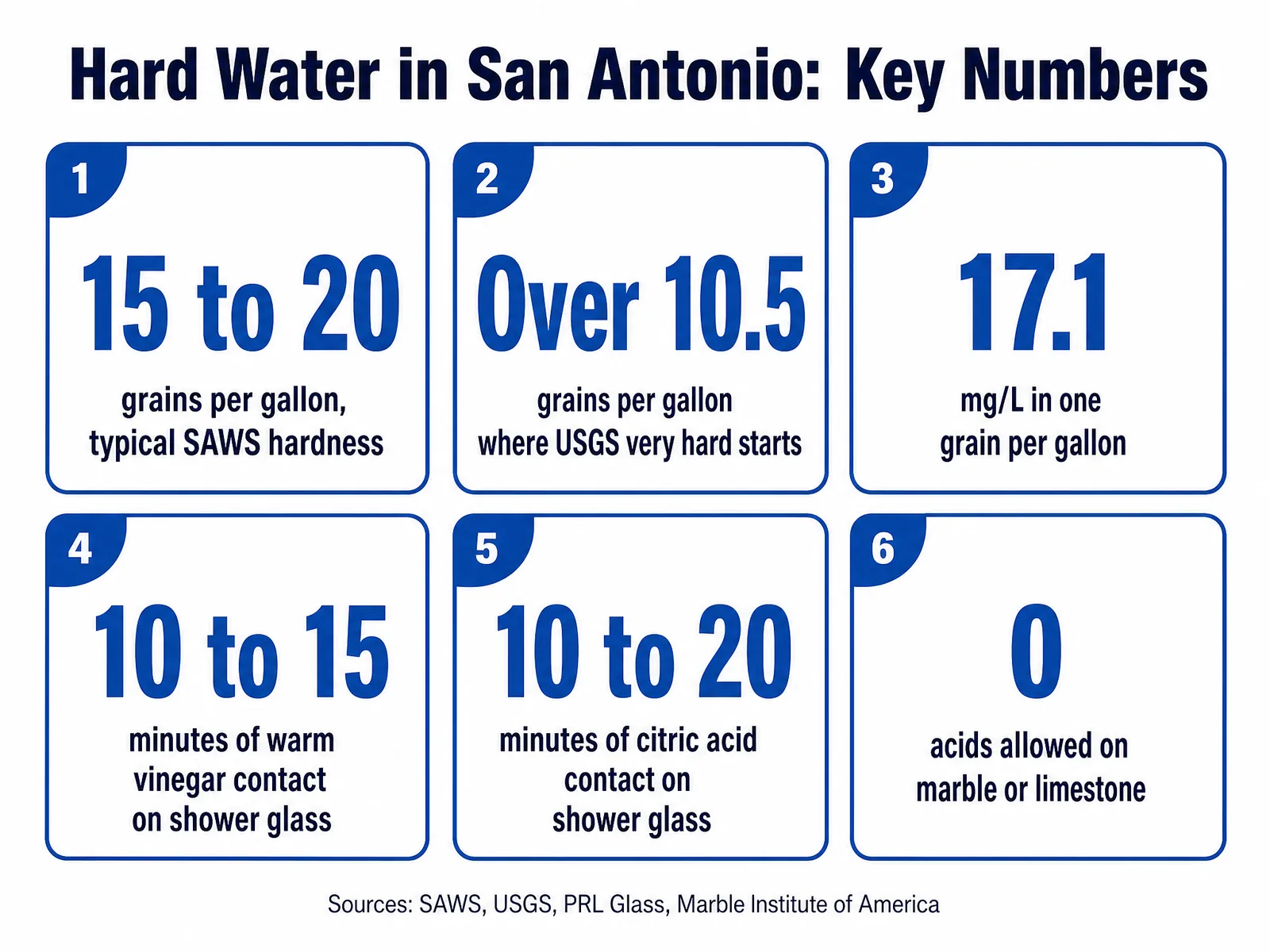
- The SAWS water quality FAQ says typical hardness in the water it provides is 15 to 20 grains per gallon.
- That works out to about 257 to 342 mg/L, well past the 180 mg/L "very hard" line on the USGS hardness scale.
- For shower glass, the PRL Glass shower door guide suggests equal parts warm vinegar and water, left 10 to 15 minutes.
- For severe stains, the same guide suggests 1 to 2 tablespoons of citric acid in 1 cup of warm water, left 10 to 20 minutes, then rinsed.
- The Marble Institute of America advises against vinegar, lemon juice, and other acid cleaners on marble, as the Houzz report on Marble Institute of America advice explains.
- Bleach mixed with vinegar makes chlorine gas, according to the Poison Control Centers warning on mixing cleaners.
Why does San Antonio water leave white spots on everything?
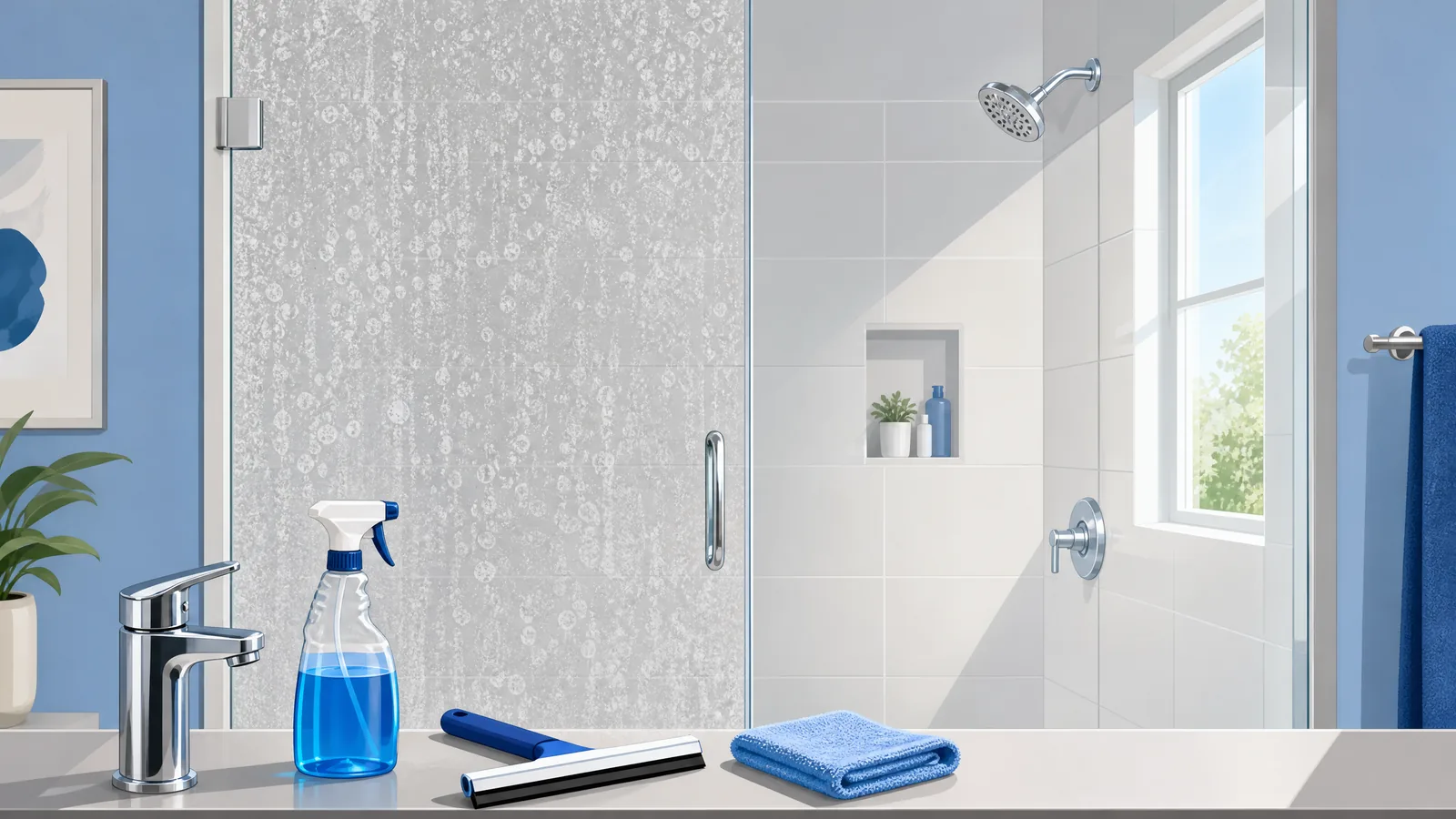
San Antonio water leaves white spots because it is very hard, and the minerals stay behind when the water dries. The SAWS water quality FAQ says the typical hardness of the water it provides ranges from 15 to 20 grains per gallon (gpg).
Hardness is the concentration of calcium and magnesium in the water. SAWS explains that as water moves through soil and rock, it dissolves small amounts of minerals that make water hard. When a drop dries on a surface, the water leaves and the minerals remain as solid white deposits.
Here is how that compares to the USGS scale. One grain per gallon equals 17.1 mg/L, per the Soquel Creek Water District hardness table. That works out to about 257 to 342 mg/L for our local water.
The USGS calls anything above 180 mg/L very hard. So San Antonio water sits well past that line.
The same USGS page notes the EPA has not set a legal limit for hardness, because calcium and magnesium are not toxic. SAWS also says hard water is not a health hazard. The problem is mostly how it looks on your glass and fixtures.
What do you need before you start?
You need a short list of plain supplies, and most are already in a kitchen cabinet. Here is what to gather:
- White vinegar
- Citric acid powder, optional, for severe stains
- A spray bottle and a small bowl
- Microfiber cloths and paper towels
- A soft brush
- A squeegee
- Rubber gloves
Check the surface first, because the whole method depends on it. Vinegar and citric acid work by dissolving minerals, and that is exactly why they are the wrong tool for natural stone. If you are not sure what your shower wall, vanity top, or floor is made of, treat it as stone and skip the acid until you know.
How do you remove hard water stains from shower glass?
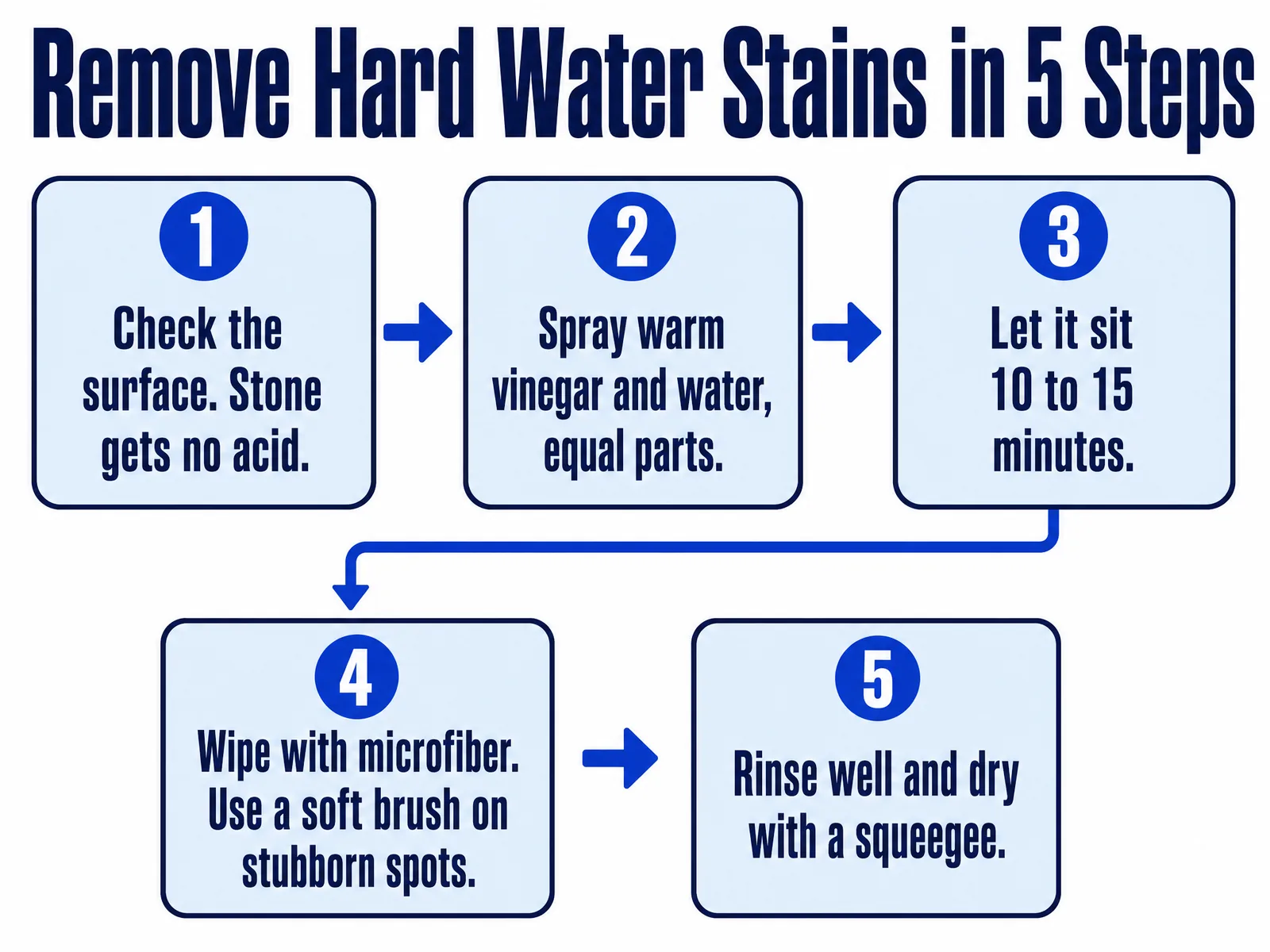
You dissolve the mineral film with a mild acid, give it time to work, then rinse it all away. Acid needs contact time, so a quick spray and wipe achieves little. Follow these steps in order:
- Check the surface. Make sure the area is shower glass or a fixture you can safely treat. Keep the spray off any marble, limestone, or other natural stone nearby, and test a hidden spot on fixtures first.
- Mix and warm. Combine equal parts white vinegar and water, then warm it without boiling. Put on your gloves.
- Saturate and hold contact. Soak the glass, then press paper towels soaked in warm vinegar against it. On vertical glass the liquid runs off fast, and the towels keep it in contact with the spots.
- Wait 10 to 15 minutes. That is the range the PRL Glass shower door guide gives for vinegar on shower glass.
- Wipe and gently scrub. Use a microfiber cloth or soft brush on the spots that remain.
- Rinse thoroughly and dry. Vinegar residue left to dry can leave its own hazy film. Rinse well, then squeegee and wipe the glass dry.
For severe stains, or if the vinegar smell bothers you, switch to citric acid. Mix 1 to 2 tablespoons of citric acid powder in 1 cup of warm water, apply it, and leave it 10 to 20 minutes. Then rinse thoroughly. The PRL Glass guide also describes citric acid as working better than vinegar on yellow or orange stains.
Which cleaner works best on each surface?
Warm vinegar and water suits shower glass, but stone needs a different product altogether. Use this table as a quick check before you spray anything.
| Surface | Safe approach | Contact time | Do not use |
|---|---|---|---|
| Shower glass | Equal parts warm vinegar and water, paper towel method, rinse and dry | 10 to 15 minutes, or 10 to 20 with citric acid | Bleach mixed with vinegar; leaving vinegar to dry on the glass |
| Faucets and fixtures | Test a hidden spot first, wipe with a cloth, rinse and dry | Short, then rinse | Letting acid sit on the finish; strong acids left on fixtures can cause corrosive damage |
| Marble and limestone | pH neutral stone safe cleaner only | Not applicable | Vinegar, lemon juice, citric acid, other acid cleaners, bleach |
| Granite and travertine | pH neutral stone safe cleaner only | Not applicable | Vinegar, lemon, citric acid |
What should you never use on marble, granite, and limestone?
Never use vinegar, lemon juice, citric acid, or any acid cleaner on marble, and treat limestone the same way. The Marble Institute of America, now the Natural Stone Institute, advises against these products, and against bleach too, according to the Houzz report on Marble Institute of America advice. The PRL Glass guide also says not to apply acids on marble, granite, or travertine.
The reason is chemistry. The Natural Stone Institute care guide says etch marks are caused by acids left on the surface of the stone, and that products containing lemon, vinegar, or other acids may dull or etch calcareous stones. Calcareous stone is made mainly of calcium carbonate, which the guide says is sensitive to acidic solutions.
A stain sits on top of the stone, and cleaning can lift it. An etch is damage to the finish itself, a dull patch where the acid attacked the surface. That is why the Natural Stone Institute says to contact your stone dealer or a professional stone restorer to refinish or repolish etched areas.
On sealed hardwood, tile, and stone, our team uses a pH neutral cleaner that will not strip finishes or etch counters. We use the same careful approach in homes across Alamo Heights, Terrell Hills, and Olmos Park.
Can you mix bleach, vinegar, and other cleaners?
No, never mix bleach with vinegar or with ammonia based products. Bleach plus an acid makes chlorine gas, and bleach plus ammonia makes chloramine gas. The CDC warns that mixing cleaning products is extremely dangerous, as the Poison Control Centers warning on mixing cleaners reports.
Follow the label directions on every product, wear gloves, and rinse the surface well between products. If you used bleach earlier in the week, rinse the shower fully before you spray vinegar.
If you notice a sharp smell, leave the room and open a window. Call Poison Control at 1-800-222-1222 if anyone feels unwell.
How do you keep hard water stains from coming back?
Squeegee the glass after every shower and wipe the taps dry. This takes less than a minute, and it removes the water before it can leave minerals behind.
Use a damp microfiber cloth for quick wipe downs instead of letting the tap run. Our guide to cleaning with less water as SAWS rates rise shows how one bucket and a damp cloth can do the job.
Two other options exist. A water softener removes calcium and magnesium before they reach your shower, and water repellent treatments make droplets bead and run off the glass. Both are plumbing or product decisions, so ask a plumber or the product maker if that route interests you.
Be realistic about the goal. Nothing makes San Antonio water soft, so some spotting will return. In Stone Oak and every other part of the city, the spots come from the same minerals in the water. A regular wipe down keeps everything easier to clean.
If you want a plan for the whole house, our room by room cleaning guide covers where to start.
When is it time to call a cleaning professional?
Call a professional if the glass stays cloudy after a thorough deep cleaning. The PRL Glass guide says minerals may have etched the glass, no cleaner can reverse etching, and scrubbing harder can make it worse. Stop there rather than scrubbing more.
If your bathrooms have not been professionally cleaned in a while, book Deep House Cleaning first. In bathrooms, our team does detailed scrubbing of tile, grout, and fixtures, removes hard water buildup from shower glass and faucets, and wipes baseboards and door frames. For grout and hard water buildup, we use a mineral safe descaler that removes deposits without scratching tile or fixtures.
After that first visit, switch to Recurring Cleaning to keep the home at that level. If your home is already in good shape, a regular House Cleaning visit keeps it that way.
Renters and sellers have another option. Move-In/Move-Out Cleaning gets a home ready for the next person. If you are worried about your deposit, read our guide to security deposit cleaning deductions.
Here is what we do not do. We are a residential only cleaning company, and we do not shampoo carpets, wash walls, wash exterior windows above ground level, move heavy furniture or appliances, or handle biohazard, mold, or pest problems.
Our cleaning professionals are background checked. We are licensed, bonded, and insured, and our founder, Emeka Ogbonna, has over 15 years of professional cleaning experience. Our service standard is simple: tell us within 24 hours of the cleaning and we will come back and make it right at no extra charge.
You see your price before you book, using our instant quote. We serve San Antonio, Alamo Heights, Terrell Hills, Olmos Park, Shavano Park, Stone Oak, The Dominion, Rogers Ranch, and Hill Country Village. You can check all of our service areas on one page.
Hard Water Stain FAQs
Does vinegar remove hard water stains?
Yes, vinegar removes most hard water stains on shower glass and faucets. It is a mild acid that dissolves mineral deposits. Use equal parts warm vinegar and water, keep it on the surface for 10 to 15 minutes, then rinse well.
Is San Antonio water hard?
Yes, San Antonio water is very hard. The SAWS water quality FAQ says typical hardness ranges from 15 to 20 grains per gallon. That is well above the USGS very hard line of 180 mg/L.
Can I use vinegar on a marble shower or countertop?
No, do not use vinegar on marble. The Marble Institute of America advises against vinegar, lemon juice, and other acid cleaners on marble, per the Houzz report on its advice. Acid can etch the surface, and an etch dulls the finish and needs professional repolishing. Use a pH neutral stone safe cleaner instead.
How long should I leave vinegar on shower glass?
Leave warm vinegar and water on shower glass for 10 to 15 minutes. The PRL Glass shower door guide gives that range. Press soaked paper towels against the glass so the liquid does not run off, then rinse thoroughly.
Why do the spots come back right after I clean?
The spots come back because every drop of hard water leaves minerals behind as it dries. Squeegee the glass after each shower and wipe the taps dry. That removes the water before the minerals can settle.
Is hard water in San Antonio safe to drink?
Yes, SAWS says hard water is not a health hazard. The USGS adds that the EPA has not set a legal limit for hardness because calcium and magnesium are not toxic. The trouble is mostly cosmetic, like white spots on glass and fixtures.
Do you remove hard water stains during a cleaning?
Deep House Cleaning includes removing hard water buildup from shower glass and faucets in bathrooms. Our team also scrubs tile, grout, and fixtures. Questions about what else is included? Visit our FAQ page.
Ready to see your price? It takes less than a minute, and booking is available 24/7.
Get Your Instant Quote Book Online Now
Prefer to talk? Call (210) 405-7040.
More Guides
- San Antonio Water Bills Are Going Up: Clean With Less Water: City Council locked in years of SAWS rate increases. See the new bill schedule and how to cut water use while you clean.
- Airbnb Turnover Cleaning Checklist for San Antonio Hosts: The order of work, room by room tasks, and the San Antonio checks for hard water, humidity, cedar season, and city safety rules.
- Move-Out Cleaning Checklist for San Antonio Renters: What to clean before you hand back the keys, what your landlord is actually checking for, and how Texas law protects your deposit.
Emeka Ogbonna is the founder of San Antonio Maid Services LLC, a locally owned, residential only house cleaning company in San Antonio, TX 78240. He has over 15 years of professional cleaning experience.